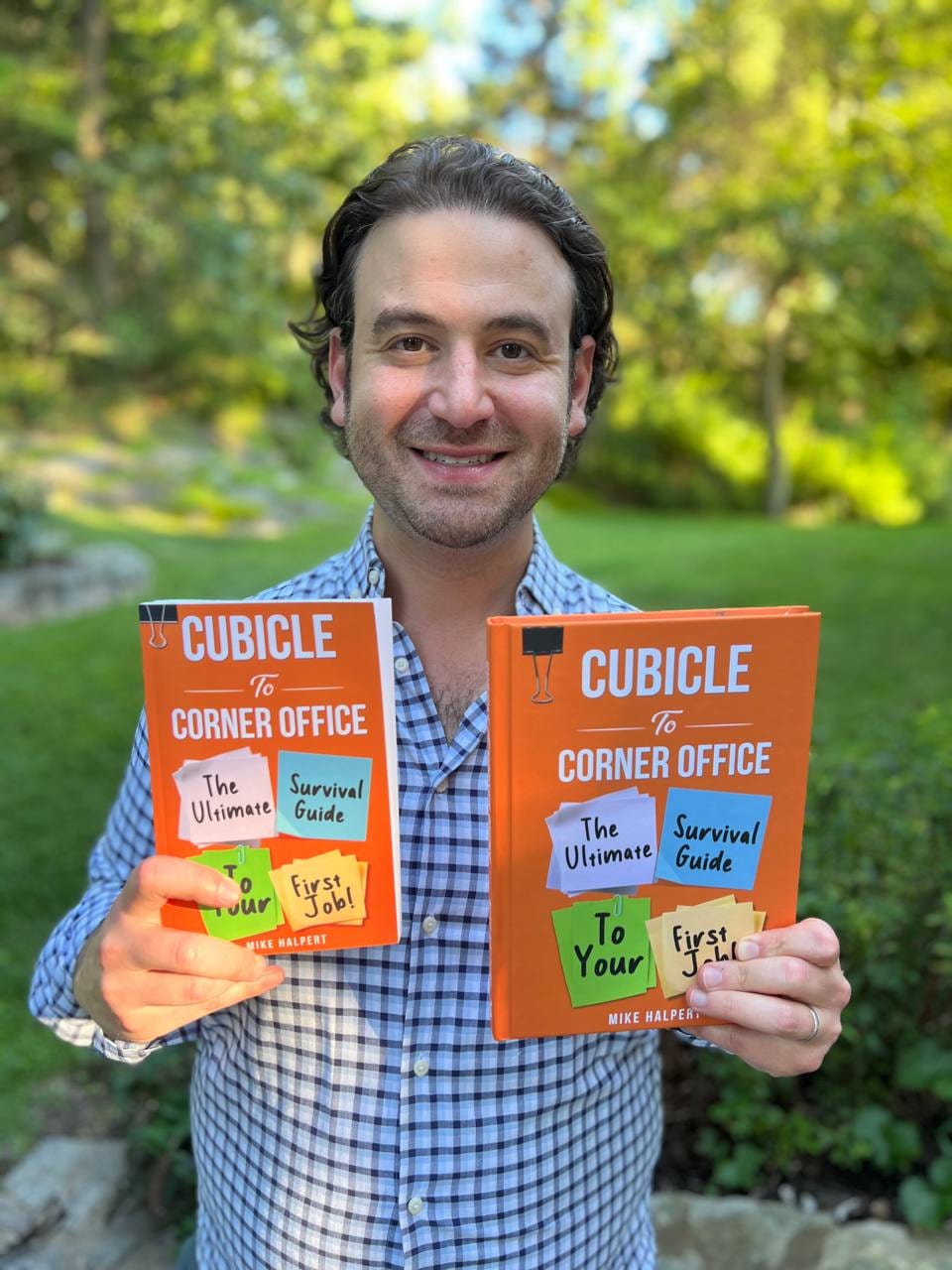
I was born in the early ’80s, which means I remember answering machines and card catalogs but
still grew up to be the person on the team who fixes everyone’s Zoom. I’m a digital native who
doesn’t want to be an influencer. I met my spouse on an app, but I also like paper books.
Across a twenty-year career, I’ve worked for executives who dictate emails to assistants and
alongside engineers who live inside Figma and GitHub. That bilingualism — old-guard and
new-guard — is most of what qualifies me to write about early-career life.
I started out in the mailroom at the William Morris Agency (now WME), one of the top talent
agencies in the world. On paper, the job was sorting packages. In practice, it was a graduate
program in professionalism: learning how Fortune 500 executives talk to their assistants, how
agents guard client relationships, and how every email you send in a high-pressure environment
is a reputation bet. That job is where I learned that the unspoken rules are the real rules.
After business school at USC Marshall (undergrad at NYU), I joined a large consulting firm in a
business-strategy and product-management practice. My clients were Fortune 500s — investment
banks, movie studios, telecoms — which meant I spent most of my twenties parachuting into
other people’s organizations and learning their internal weather. I worked with clients in
the US, Canada, Europe, and Japan, and had the uncommon luck of seeing how national culture
changes corporate behavior firsthand.
Today I lead a department at an e-commerce technology company, where I manage managers and
spend most of my time coaching — helping people who were the smartest kid in their college class
figure out how to be a good first-year professional. I’ve interviewed and hired hundreds of
people. I’ve also had to put people on performance-improvement plans and, occasionally, let
them go. That’s the uncomfortable half of the job that almost no career book talks about,
and it’s a lot of why I wrote this one.