Introducing Cubicle to Corner Office
Why I wrote the guide I wish I had — and how it fits into the First 90 Days OS.
Most people don’t struggle in their first job because they’re not smart enough. They struggle because the work comes with invisible rules.
- How to communicate progress without sounding unsure
- How to ask for help without dumping the problem on your manager
- How to handle meetings, priorities, and the subtle politics
- How decisions actually get made
If you’re a new grad, it feels like everyone else got a handbook. If you’re a manager, it feels like you’re re-teaching basic workplace skills on repeat.
Two kinds of work
Every office job has two kinds of work:
- The obvious work — the spreadsheet, the deck, the ticket.
- The invisible work — alignment, updates, follow-through, not surprising people.
School trains you for the first. Most first jobs assume you already know the second. That gap is where early-career anxiety comes from, and it’s why managers end up micromanaging even when they don’t want to.
What this site is
The site, and the book behind it, are meant to be the handbook I wish I had.
Not “be confident.” More like: here’s the exact template, here’s the script, here’s the system. Copy-paste your way to competence while you’re still nervous.
Why I wrote it
I started my career about twenty years ago in the mailroom at William Morris. I had done all the “school preparation” stuff. What I wasn’t prepared for were the skills nobody grades you on.
My first day at a big tech company, my parents had told me to dress the part. I bought a new suit. I stepped off the elevator and everyone was in t-shirts and jeans. I spent the day feeling like a fish out of water, and the lesson stuck: making a good impression on Day 1 is less about the suit and more about reading the room.
Over time — especially after business school and a career pivot — I realized I was spending a lot of my life coaching new hires through the same three problems:
- They were doing work, but not showing progress
- They were asking questions, but not asking them well
- They were working hard, but not aligned
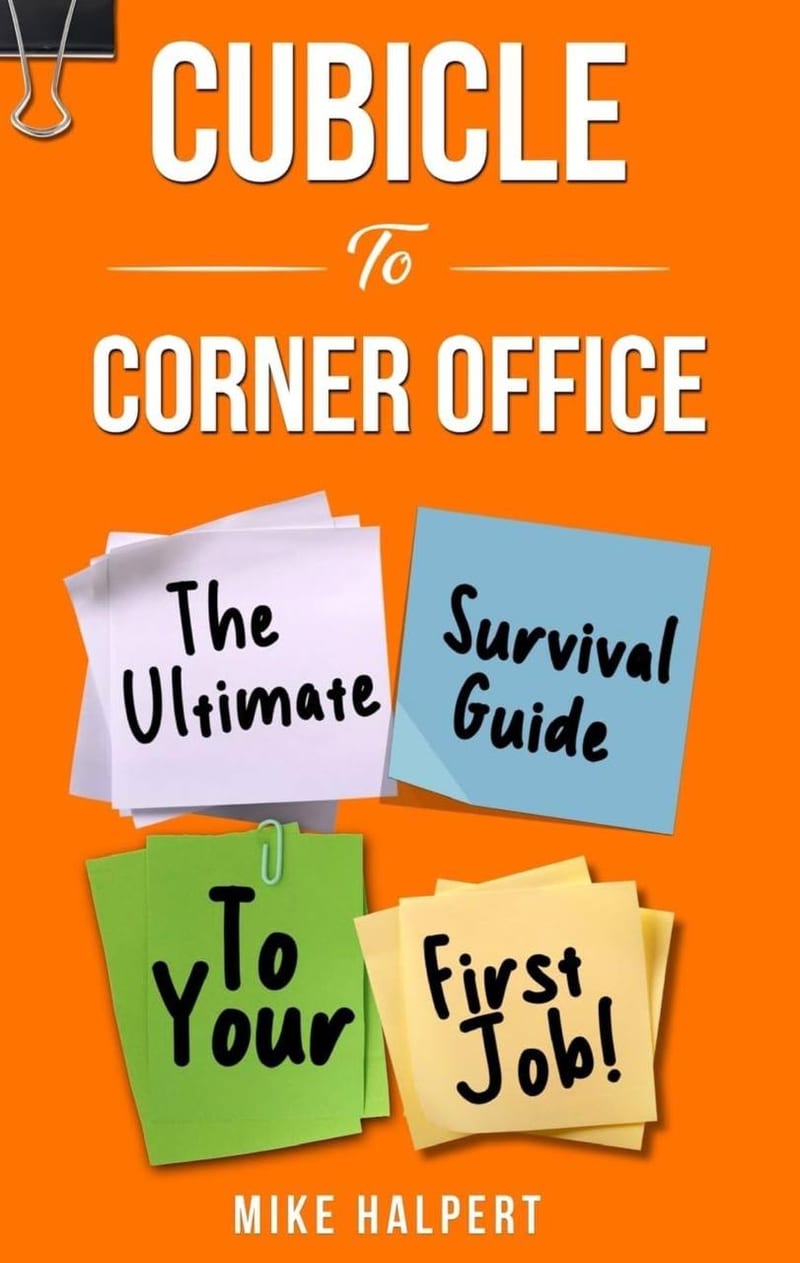
So I wrote Cubicle to Corner Office: The Ultimate Survival Guide to Your First Job. Not a motivational “believe in yourself” book. A practical guide for the parts of work that are real, and rarely explained.
What the book is actually about
Building tangible skills beyond your degree. Your degree gets you in the door. Your operating system keeps you employed and gets you promoted. That looks like setting goals you can hit, protecting focus time, communicating progress without rambling, flagging risks early so your manager isn’t surprised.
Building meaningful relationships without being fake. Nobody ships alone. Early in your career, relationships speed up answers, reduce rework, and create advocates when you’re not in the room.
Demonstrating motivation the right way. Motivation isn’t “working late.” The kind managers trust looks like: learning fast, asking good questions, delivering what was asked, making your manager’s life easier. Do those consistently and you become low-drama and high-trust, which is the cheat code.
What you’ll actually get
I tried to make this feel like having a slightly older coworker whispering, “do this, not that.”
- A clean status update format that works in email or Slack
- A 1:1 agenda so your meetings produce decisions, not rambling
- “How to ask questions” phrasing that gets you answers without sounding helpless
- Meeting follow-up templates so decisions don’t evaporate
- How to manage up without being political or fake
- How to build relationships without the networking cringe
If you’re early career: you’re not behind. You’re just missing the operating manual.
If you’re a manager: the goal isn’t to “fix the kids.” It’s to create repeatable systems — templates, norms, examples — so new hires ramp without constant re-teaching.
—
The version of me at 22 would have read this and rolled his eyes. “I went to a good school, I’m sharp, I’ll figure it out.” He spent eighteen months underperforming his potential because the skills nobody graded him on were the ones that mattered most. The handbook didn’t exist then. It does now. Use it. The next twenty years are long.
If you want the backbone of the system, start here: Start here.
Filed under: Career Basics

Cubicle To Corner Office
The 317-page playbook for the transition from student to professional.
Related pieces

What to do when you get sick in your first 90 days
Sick days in your first 90 days feel higher-stakes than they are. Here's how to handle the message, the handoff, and the return without making your manager worry.

A reader asks: my onboarding buddy has gone AWOL — what now?
Your assigned onboarding buddy vanishes in week two. More common than anyone admits. Three moves that make the rest of your ramp work without them.

Dress code decoder: when business casual means something different at every company
How to read the unspoken rules behind a business casual policy so your first impression is signal, not static.
Join the conversation
Real readers (and Mike) reply in here. The number next to each comment is its upvote score — sign in with just a display name to add your vote or post a reply. No email or password required.